Creating a drought-tolerant landscape in North Florida is not only an environmentally responsible choice, but it can also lead to significant savings on your water bill. With careful planning and the right plant selections, you can have a beautiful and thriving yard that requires minimal watering, even during the driest months. Let's explore how to transform your landscape into a water-wise oasis.
Understanding North Florida's Climate
North Florida experiences distinct wet and dry seasons. While we receive ample rainfall during certain times of the year, droughts can occur, making it essential to choose plants that can withstand periods of low water availability. Understanding your soil type is also crucial. Sandy soils, common in this region, drain quickly, so incorporating organic matter can improve water retention.
Planning Your Drought-Tolerant Landscape
Start by assessing your property's microclimates. Note areas that receive full sun, partial shade, or are consistently dry. Group plants with similar water needs together to make watering more efficient. Consider the mature size of plants to avoid overcrowding and ensure they have enough space to thrive. A well-thought-out design will not only conserve water but also create a visually appealing landscape.
Selecting the Right Plants
Choosing native and Florida-Friendly plants is key to a successful drought-tolerant landscape. These plants are adapted to the local climate and soil conditions, requiring less water and maintenance once established. Here are a few excellent choices:
Trees:Shrubs:Groundcovers:Perennials:- Trees: Live Oak, Southern Magnolia, Crape Myrtle
- Shrubs: Yaupon Holly, Dwarf Palmetto, Coontie
- Groundcovers: Sunshine Mimosa, Asiatic Jasmine, Beach Sunflower
- Perennials: Black-Eyed Susan, Coreopsis, Salvia
Water-Wise Irrigation Techniques
Even drought-tolerant plants need some water, especially when they are first planted. However, efficient irrigation practices can minimize water waste. Consider these techniques:
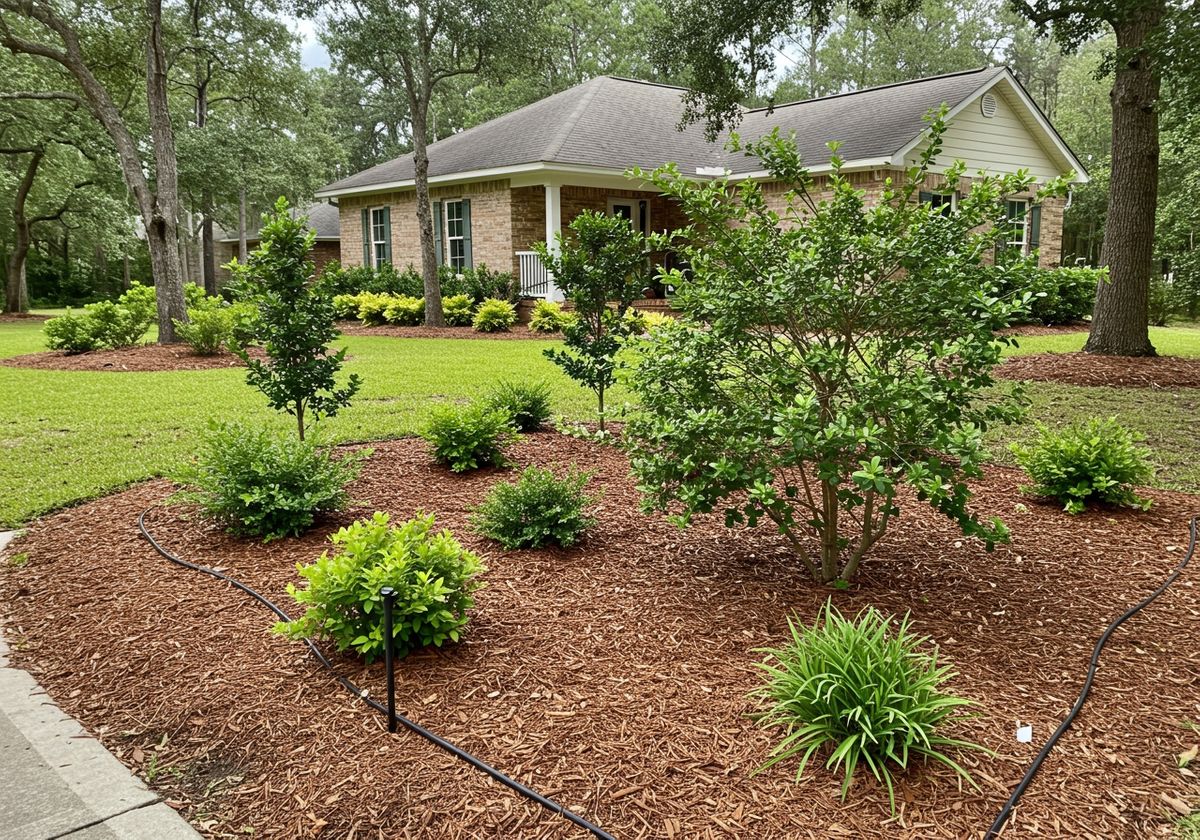
Drip Irrigation:Soaker Hoses:Rain Barrels:Smart Sprinkler Systems:- Drip Irrigation: Delivers water directly to the plant roots, reducing evaporation and runoff.
- Soaker Hoses: Similar to drip irrigation, soaker hoses provide a slow, steady stream of water to the soil.
- Rain Barrels: Collect rainwater to use for irrigation, reducing your reliance on municipal water.
- Smart Sprinkler Systems: Use weather data to adjust watering schedules automatically.
Mulching for Moisture Retention
Applying a layer of mulch around your plants is one of the simplest and most effective ways to conserve water. Mulch helps to:
- Reduce evaporation from the soil surface
- Suppress weed growth
- Moderate soil temperature
- Improve soil health as it decomposes
Use organic mulches like pine straw, wood chips, or shredded leaves. Avoid using rocks or gravel, as they can heat the soil and increase water loss.
Creating a drought-tolerant landscape in North Florida is a rewarding endeavor that benefits both you and the environment. By understanding the local climate, planning your design carefully, selecting the right plants, and implementing water-wise irrigation techniques, you can create a beautiful and sustainable landscape that thrives with minimal water. Remember, TLC Total Lawn Care has been providing landscapes that mean business since 1983. If you need help creating a drought-tolerant landscape, or require any commercial lawn and landscape maintenance services, contact us today to learn more about our customizable packages tailored to your business's specific requirements and budget. Landscapes that Mean Business | Since 1983