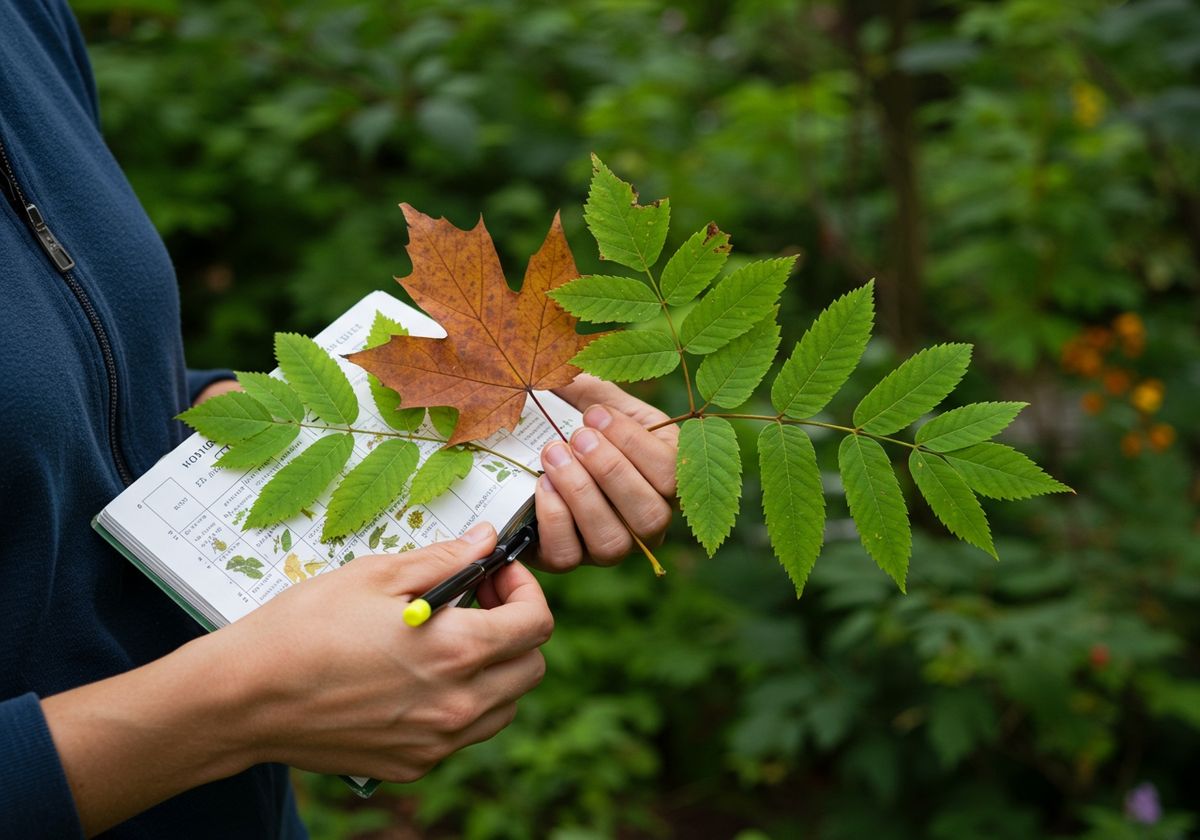
Identifying different types of leaves can be a rewarding way to connect with nature and better understand the plants around you. Whether you're a budding botanist, a curious homeowner, or simply someone who enjoys the outdoors, learning to distinguish leaf types is a valuable skill. This guide will walk you through the key characteristics to look for, making leaf identification accessible and fun.
Leaf Morphology: Key Features to Observe
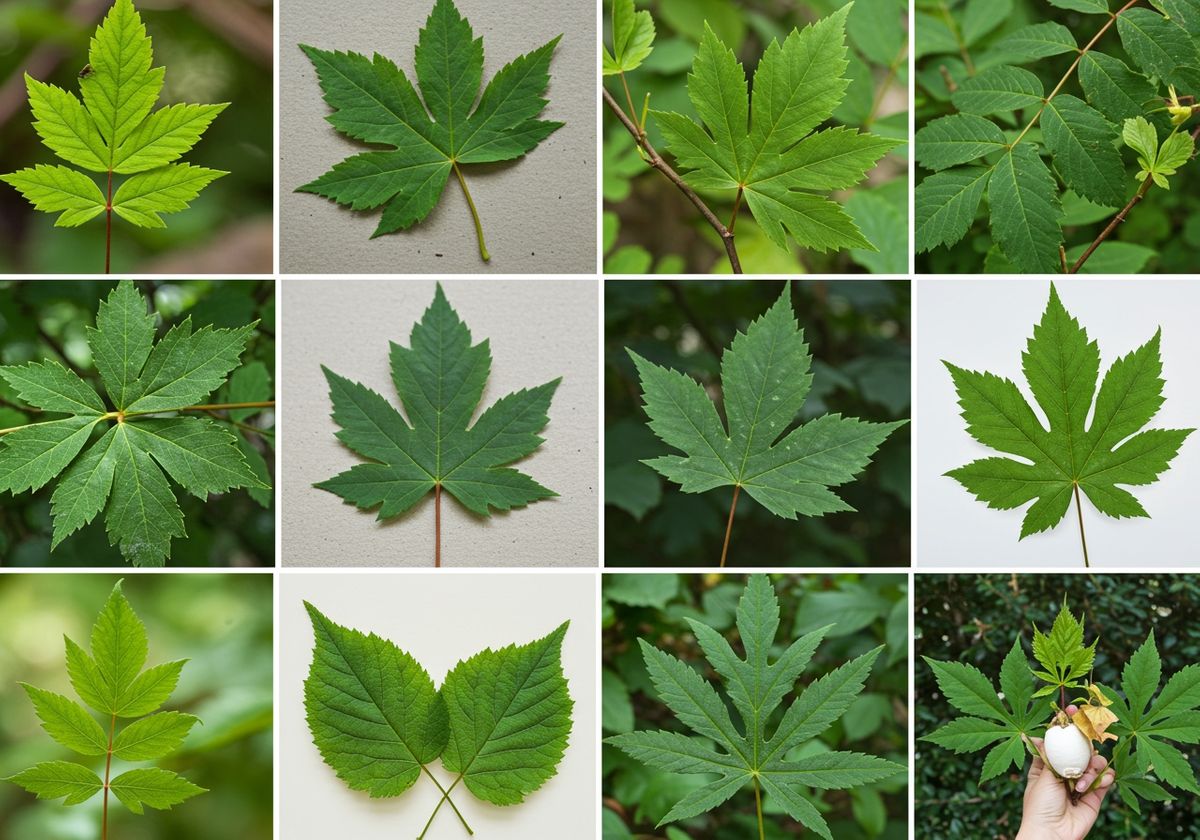
When identifying leaves, focus on these primary characteristics:
Leaf Arrangement:Leaf Type:Leaf Shape:Leaf Margin:Leaf Venation:
Leaf Arrangement: Note how leaves are arranged on the stem. They can be alternate (one leaf per node, alternating sides), opposite (two leaves per node, directly across from each other), or whorled (three or more leaves per node).
Leaf Type: Determine if the leaf is simple (a single, undivided blade) or compound (composed of multiple leaflets). Compound leaves can be further classified as palmate (leaflets radiating from a central point) or pinnate (leaflets arranged along a central stalk).
Leaf Shape: Observe the overall shape of the leaf blade. Common shapes include ovate (egg-shaped), lanceolate (lance-shaped), orbicular (circular), and cordate (heart-shaped).
Leaf Margin: Examine the edge of the leaf. Margins can be smooth (entire), toothed (serrate or dentate), lobed, or spiny.
Leaf Venation: Study the pattern of veins within the leaf. Common venation patterns include pinnate (veins branching off a central midrib), palmate (several main veins radiating from a central point), and parallel (veins running parallel to each other).
Common Leaf Types and Examples
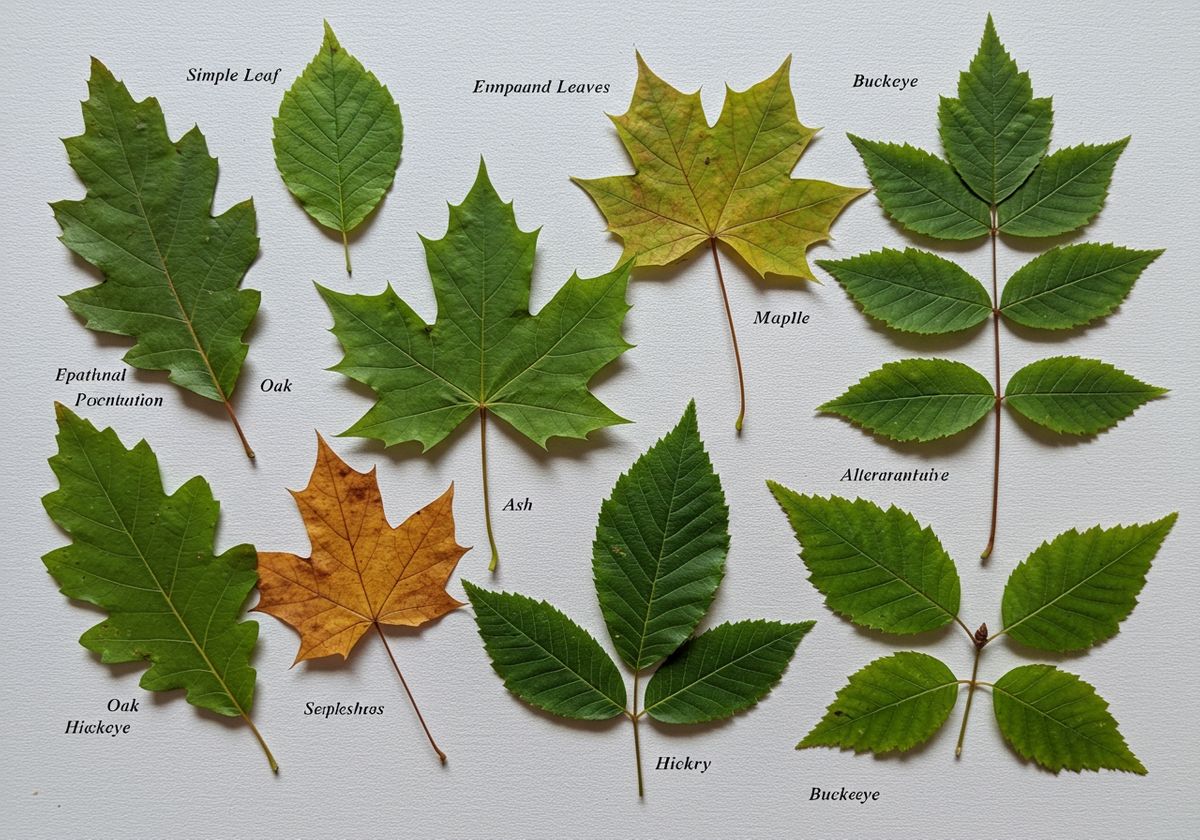
Let's explore some common leaf types and examples to help you get started:
Simple Leaves:Oak:Maple:Birch:
Oak: Typically lobed margins and pinnate venation.
Maple: Palmate venation and lobed margins.
Birch: Ovate shape with serrated margins.
Compound Leaves:Ash:Hickory:Buckeye:
Ash: Pinnately compound with opposite arrangement.
Hickory: Pinnately compound with alternate arrangement.
Buckeye: Palmately compound with leaflets radiating from a central point.
Simple Leaves:
Oak: Typically lobed margins and pinnate venation.
Maple: Palmate venation and lobed margins.
Birch: Ovate shape with serrated margins.
Compound Leaves:
Ash: Pinnately compound with opposite arrangement.
Hickory: Pinnately compound with alternate arrangement.
Buckeye: Palmately compound with leaflets radiating from a central point.
Tools and Resources for Leaf Identification

To aid in your leaf identification journey, consider using these tools and resources:
Field Guides:Mobile Apps:Online Databases:
Field Guides: Purchase a local field guide specific to your region. These guides provide detailed descriptions and illustrations of common trees and plants.
Mobile Apps: Utilize plant identification apps that use image recognition technology to identify plants from photos of their leaves.
Online Databases: Explore online databases such as the USDA Plants Database or the Missouri Botanical Garden Plant Finder for comprehensive information on plant species.
Identifying different types of leaves is a fascinating way to engage with the natural world. By observing leaf arrangement, leaf type, leaf shape, leaf margin, and leaf venation, you can unlock the secrets of the plants around you. TLC Total Lawn Care understands the importance of a healthy, vibrant landscape, and proper identification of plant life is the first step to ensuring your lawn's well-being. We've been making tall grass short since 1983, with a professional and dedicated service. If you're looking to enhance your landscape, contact us today to learn more about our customizable lawn care packages and how we can help you achieve Landscapes that Mean Business. For any questions about taking care of your lawn, call us today!