Maintaining a vibrant and healthy lawn requires more than just regular mowing and watering. Over time, a layer of dead organic matter, known as thatch, can accumulate between the grass blades and the soil surface. While a thin layer of thatch can be beneficial, a thick layer can suffocate your lawn, preventing essential nutrients and water from reaching the roots. As TLC Total Lawn Care, a family-owned and operated business serving Jacksonville since 1234, we understand the importance of proper lawn care. This guide will provide you with the ultimate knowledge on dethatching, helping you unlock a lush and thriving lawn.
What is Thatch and Why is it a Problem?
Thatch is a tightly intermingled layer of dead and living stems, leaves, and roots that accumulates on the soil surface. A thin layer (less than 1/2 inch) can be beneficial, acting as a mulch that helps retain moisture and regulate soil temperature. However, when thatch builds up excessively, it creates several problems:
Reduced Water and Nutrient Penetration: Thick thatch prevents water, fertilizer, and air from reaching the soil and grass roots.
Increased Pest and Disease Problems: Thatch provides a breeding ground for pests and diseases, making your lawn more susceptible to infestations and infections.
Shallow Root Growth: Grass roots may grow into the thatch layer instead of the soil, making the lawn more vulnerable to drought stress and temperature extremes.
Spongy Feel: A thick layer of thatch can make your lawn feel spongy and uneven.
Is Dethatching Necessary? Determining if Your Lawn Needs It
Before you start dethatching, it's essential to determine if your lawn actually needs it. Here's a simple test:
The "Thatch Probe" Test: Use a trowel or shovel to remove a small wedge of turf (about 4 inches deep). Examine the layer between the green grass blades and the soil. If the thatch layer is thicker than 1/2 inch, dethatching is likely necessary.
Visual Inspection: Look for signs of excessive thatch, such as a spongy feel, brown patches, or shallow root growth.
Choosing the Right Dethatching Method
Several methods can be used to dethatch a lawn, each with its own advantages and disadvantages:
Manual Raking: For small lawns or light thatch accumulation, a thatching rake can be effective. Use a sturdy rake with sharp tines to pull up the thatch.
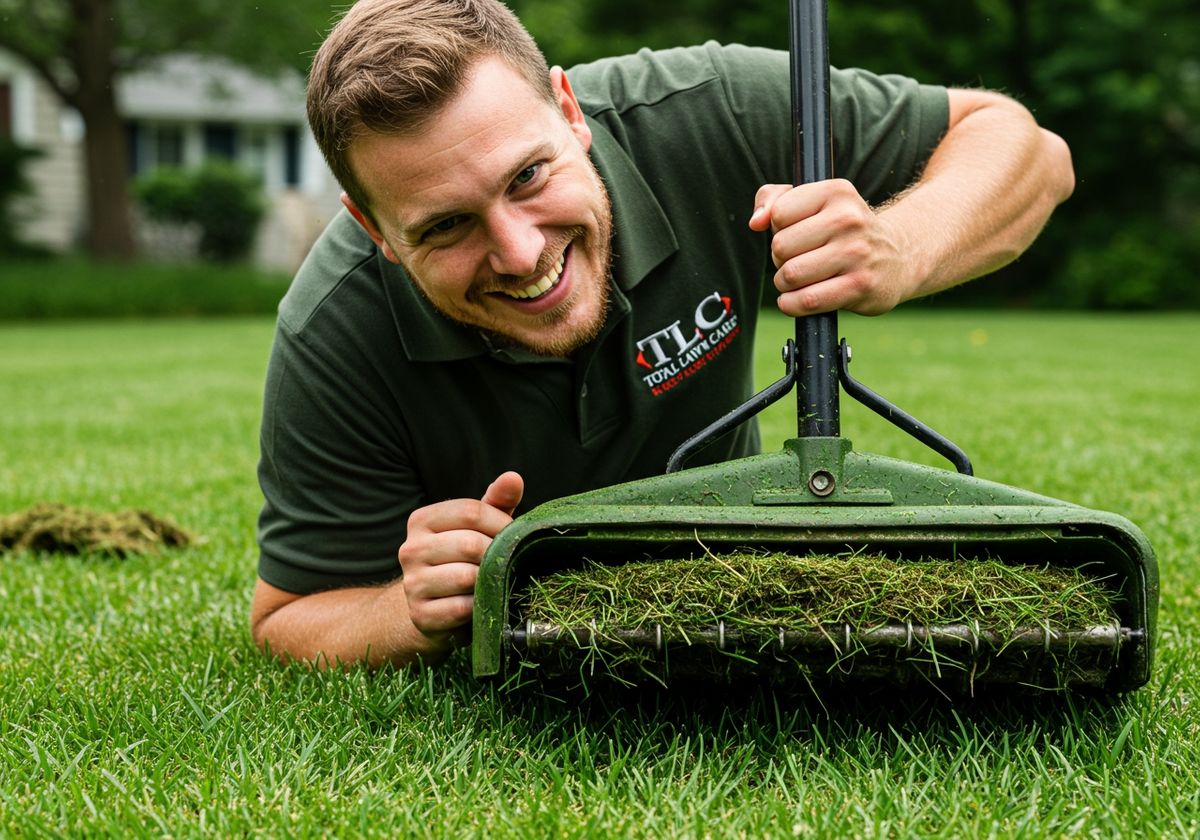
Power Rake (Vertical Mower): A power rake is a machine with vertical blades that slice through the thatch and pull it to the surface. This method is suitable for moderate thatch accumulation.
Dethatching Machine: Dethatching machines are similar to power rakes but are more aggressive and effective for heavy thatch accumulation. They typically have flail blades that pulverize the thatch.
Step-by-Step Guide to Dethatching Your Lawn
Prepare Your Lawn: Mow the lawn to a normal height and water it thoroughly a few days before dethatching. This will help loosen the thatch and make it easier to remove.
Choose Your Method: Select the appropriate dethatching method based on the size of your lawn and the amount of thatch.
Dethatch in Multiple Directions: If using a power rake or dethatching machine, make multiple passes over the lawn in different directions to ensure thorough thatch removal.
Remove the Thatch: Rake up the loosened thatch and dispose of it properly. You can compost it or bag it for disposal.
Overseed and Fertilize: After dethatching, overseed the lawn with a high-quality grass seed and apply a starter fertilizer to promote new growth.
Water Regularly: Keep the lawn moist for several weeks after dethatching to encourage germination and root development.
Post-Dethatching Care: Ensuring a Speedy Recovery
After dethatching, it's crucial to provide proper care to help your lawn recover quickly:
Watering: Water the lawn regularly to keep the soil moist but not waterlogged.
Fertilizing: Apply a balanced fertilizer to provide essential nutrients for growth.
Weed Control: Be vigilant about weed control, as dethatching can create opportunities for weeds to germinate.
Mowing: Mow the lawn regularly at the recommended height.
TLC Total Lawn Care: Your Partner in Lawn Health
Dethatching is an important part of maintaining a healthy and beautiful lawn. By following this guide, you can effectively remove thatch and create a lush, green space that you can enjoy for years to come. Remember, TLC Total Lawn Care, Landscapes that Mean Business | Since 1983, is here to help. Our experienced team offers professional dethatching services and can provide expert advice on all aspects of lawn care. Contact us today for a free consultation and let us help you achieve the lawn of your dreams!
With our commitment to customer satisfaction, dedicated account managers, regular check-ins, and service reviews, we ensure open communication and tailored solutions. We are committed to using sustainable practices that protect the environment. Our goal is to create beautiful and healthy lawns and landscapes that our clients can enjoy for years to come. TLC Total Lawn Care is your trusted partner in lawn health.